
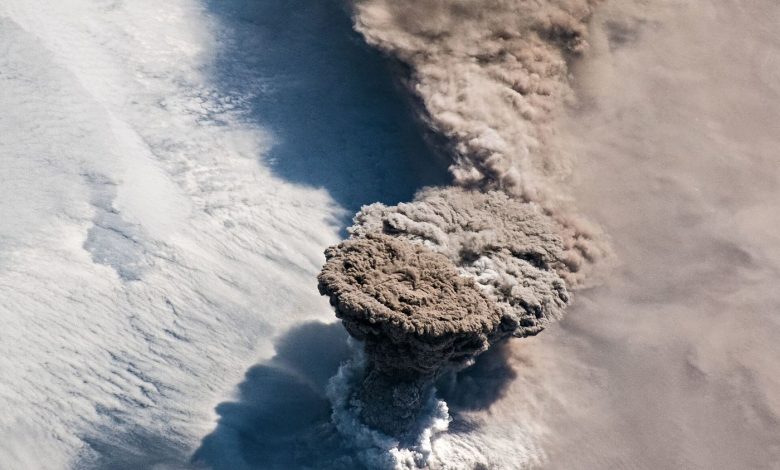
Island volcanoes often release ash in rhythmic pulses rather than a steady plume, and researchers have shown that the timing of those pulses reveals how magma is moving and fracturing rock beneath the surface. Each pulse begins with a small explosion as pressurised gas escapes through the vent, throwing ash and fragments upward before the column briefly subsides. Instruments measuring ground deformation, gas composition and infrasound can detect patterns in the sequence that change hours or days before a larger eruption. When pulses quicken and merge, it may signal that magma is rising into shallower chambers and breaking the rock that seals it. When they slow and separate, the system may be releasing pressure safely, a distinction of obvious importance to nearby communities. Island volcanoes pose particular challenges because their flanks continue beneath the sea, where collapses can generate tsunamis with little warning. Monitoring therefore combines land stations with seafloor pressure sensors and satellite measurements of ash and ground movement. Ash samples collected after each pulse act like progress reports from the magma itself, since their chemistry and texture record depth and journey time. Volcanologists compare the pulse records of many island systems to find which patterns reliably precede dangerous escalation.
What the Evidence Shows
Aviation safety depends heavily on this research, because volcanic ash clouds drifting from island eruptions can cross busy flight routes far from the source. Better pulse interpretation helps forecasters judge whether an eruption is intensifying or settling, refining the warnings that airlines use to reroute aircraft. Local observatories share their data openly during crises, allowing specialists worldwide to assist with modelling at any hour. Community preparedness improves alongside the science, with evacuation drills timed to realistic scenarios drawn from recorded pulse sequences. Scientists are candid that prediction will never become exact, because volcanic systems are chaotic and each edifice has its own plumbing. The goal is probabilistic honesty, stating clearly how likely escalation appears and what evidence would change that judgement. New machine learning tools help sort the flood of sensor data, but experienced volcanologists insist algorithms must remain explainable to the officials who act on them. Drones now sample gas directly above active vents, sparing pilots the most dangerous survey flights of earlier decades. Through all the technology, the central insight stays simple, in that a volcano communicates constantly through its rhythms, and careful listening turns frightening noise into usable warning. Reporting and analysis from sources such as NASA track the same developments, and specialists following pulsed volcanic ash venting say the direction is now consistent across independent lines of evidence.
The Wider Context
Funding bodies are watching pulsed volcanic ash venting closely because the work sits at the junction of basic curiosity and practical return. Grant panels increasingly ask for a path from discovery to application, while researchers push back that the most valuable uses of fundamental science are rarely the ones written into the original proposal. The tension is productive when both sides stay honest about timescales.
What Happens Next
The long view on pulsed volcanic ash venting is that fields advance by accumulation rather than by single announcements. This result adds a solid, checkable piece to a structure many teams are building, and its authors have shared their data so the piece can be tested from every side. That is how the picture eventually becomes reliable enough to act on. You can follow related developments in our coverage of science.
It is also worth remembering how quickly the picture in this area has changed before. Positions that looked settled a few years ago have been revised as new data arrived, and the same humility is appropriate now. The strongest coverage of this subject, and the most useful advice, tends to come from sources that update their views openly when the facts move, rather than defending an earlier position long after it has stopped fitting the evidence available.