
The Tactical Vulnerability of Edge-of-the-Box Over-Passing to Counter-Attacking Transitions in the 2013/2014 Premier League

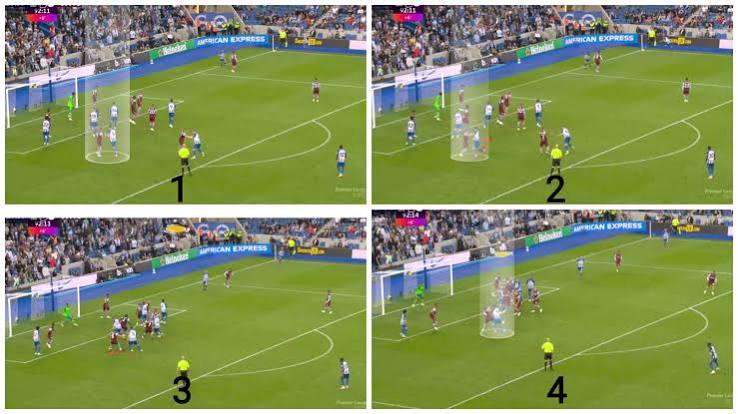
The tactical landscape of the 2013/2014 English Premier League campaign highlighted a profound clash between elaborate, short-passing possession systems and explosive, vertical counter-attacking strategies. While dominating possession and stringing together intricate passes immediately outside the opposition’s penalty area is traditionally viewed as a sign of offensive superiority, it frequently acts as a structural trap. When a team pushes its entire defensive line past the halfway line to support close-quarter passing patterns in the final third, it exposes itself to immediate spatial vulnerability. For analytical sports investors, mapping the exact locations where possession teams turned over the ball provided a highly accurate mechanism for forecasting match outcomes within Asian Handicap and team-specific goal markets.
Why Dense Final-Third Passing Overloads Create Immediate Structural Risks
Committing a high volume of players to tight, intricate passing combinations directly outside the opponent’s eighteen-yard box inherently compromises a team’s rest-defense structure. To maintain passing triangles against a packed, low-block defense, full-backs and central midfielders must push high up the pitch, often occupying zones deep in the attacking half. This extreme forward movement leaves vast expanses of open grass behind them, creating an ideal environment for direct opponents to exploit the moment possession changes hands.
The primary danger stems from the condensed nature of the opposition’s defensive block. When ten outfield players defend a compact space, passing lanes become highly constricted, dramatically increasing the mathematical probability of an interception. A single misplaced pass or heavy touch instantly triggers a high-velocity transition phase where the defending team is completely caught out of position, transforming a period of sustained offensive pressure into a catastrophic defensive emergency within a matter of seconds.
The Biomechanical Breakdown of Central Turnovers in Tight Spaces
A turnover occurring centrally at the edge of the box is far more dangerous than a lost ball in the wide channels. When a pass is intercepted in wide areas, the touchline acts as a natural boundary that limits the opponent’s counter-attacking angles and gives tracking defenders time to recover their defensive shape. Conversely, a central turnover opens up the entire pitch, allowing the counter-attacking side to break forward symmetrically and split the remaining defenders with rapid, direct vertical passes.
To illustrate how an intricate attacking sequence breaks down into a high-probability concession scenario, the following procedural sequence charts the tactical chain reaction that analytical data models track to project defensive failures.
1.Deep Final-Third Entry:Dense Structural Compression.
The possession-based team moves eight outfield players into the final third, circulating short passes directly outside the opponent’s low-block eighteen-yard box.
2.Central Passing Lane Failure:Interception Mechanism.
An interior playmaker attempts a high-risk, short-range vertical pass through a crowded central channel, resulting in an immediate interception by an alert center-back.
3.Instant Outlets to Quick Wingers:Spatial Exploitation.
The intercepting defender fires a rapid, first-touch forward pass to an advanced winger who has intentionally stayed high up the pitch, completely bypassing the possession team’s trailing midfielders.
4.Unprotected 2-on-2 Engagement:Defensive Collapse.
The counter-attacking side charges into the wide-open half of the pitch, forcing isolated, slow center-backs into a desperate back-pedaling scenario that frequently ends in a high-value shot or a tactical card infraction.
Adhering to this structured sequence demonstrates that counter-attacking goals are rarely random accidents; they are the logical consequence of structural defensive vulnerability. When a team’s statistical tracking shows an increasing reliance on central short passing inside crowded zones over a rolling five-match window, their susceptibility to transition goals rises exponentially. Interpreting these specific passing indicators allows sophisticated analysts to spot value anomalies, fading possession-heavy favorites when they match up against defensively disciplined, transition-oriented underdogs.
The High-Profile Liability of Arsène Wenger’s Late-Season Arsenal Formations
Arsenal’s tactical setup during the 2013/2014 campaign served as a prime example of how over-elaborate central passing can devastate a team’s defensive record against elite opposition. Under Arsène Wenger, Arsenal routinely dominated early possession metrics by utilizing highly technical midfielders who constantly looked to combine in tight spaces directly outside the box. While this approach produced visually attractive football against lower-tier sides, it proved structurally fatal when matching up against teams equipped with elite pressing traps.
When Arsenal encountered highly physical, rapid-transition teams away from home, their over-passing outside the box was systematically punished. Massive away defeats to Liverpool, Chelsea, and Manchester City were directly caused by central turnovers in the final third that left isolated center-backs completely unprotected against elite velocity. Data-driven investors who recognized this recurring structural vulnerability made significant profits by backing opposition teams on the Asian Handicap lines, completely ignoring mainstream media narratives that focused on Arsenal’s high position in the league table.
Quantitative Discrepancies Between Possession Volume and Transition Vulnerability
Evaluating a team’s true offensive efficiency requires looking much deeper than simple, unweighted possession percentages. A club can comfortably hold 65% possession over ninety minutes, yet present a highly negative expected value profile if that possession is distributed in non-threatening, high-risk areas. Specialized data tools solve this analytical problem by weighting possession against the absolute number of high-turnover sequences allowed per match.
The data table below utilizes custom performance filters to contrast raw possession volume against transition vulnerability indicators across different tactical systems during the 2013/2014 Premier League season.
| Club Tactical Profile | Average Possession Volume | Edge-of-Box Turnovers (Per Game) | PPDA of Opposition | Transition Goals Conceded | Target Betting Market |
| Intricate Short-Passing Elite | 62% | 14.8 | 9.2 (High Press) | Elevated (11) | Against Team Clean Sheet |
| Direct Transition Modernist | 53% | 8.1 | 14.5 (Passive) | Low (4) | Team Total Goals Over |
| Pragmatic Low-Block Survival | 38% | 4.3 | 18.2 (Deep Block) | Moderate (7) | Match Under Goals Total |
Reviewing this systematic distribution demonstrates that high possession volume frequently masks severe defensive vulnerabilities. The intricate short-passing profile shows an alarming 14.8 edge-of-the-box turnovers per game, which directly explains the elevated eleven transition goals conceded over the course of the season. Breaking down team data into these precise operational metrics allowed professional sports investors to find significant value anomalies, looking past generic team names to back the specific derivative market that exploited the underlying tactical flaws of the favorite.
Strategic Capital Allocation Protocols for Exploiting Transition Mismatches
Capitalizing on structural passing inefficiencies requires a highly disciplined, data-driven bankroll framework to effectively manage the natural variance of domestic league schedules. Because a counter-attacking goal can be completely altered by an early red card or individual referee mistakes, an investor must never risk large chunks of capital on a single match outcome. Implementing a strict flat-staking model remains the only viable path to protecting a sports portfolio across a full 38-game campaign.
Isolating Value Limits on Broad Point Spreads
When a possession-heavy favorite is priced at short odds despite showing a chronic tendency to turn the ball over in central zones, the value naturally rests on the underdog plus-handicap lines. The strategic investor demands specific situational criteria before confirming a position, such as checking the health of the opponent’s primary transitional wingers and confirming that the favorite is missing their main defensive midfielder. Capping the total stake size at a maximum of 2.0% for the highest-probability transition mismatches ensures that the portfolio can comfortably absorb unexpected short-term losses, allowing the mathematical edge to play out over the long term.
The Critical Role of Transaction Velocity Across Modern Digital Betting Interfaces
Capturing consistent returns from highly volatile transition markets depends heavily on the execution speed and structural liquidity of the platform used to place the wager. Because commercial oddsmakers adjust their live Asian Handicap lines the moment a match transforms into an open, end-to-end transitional affair, any operational processing delay will instantly destroy the value margin discovered during pre-match analysis. Advanced sports forecasters recognize that choosing a high-capacity digital interface is just as vital as the mathematical precision of the underlying predictive model itself.
Managing Market Volume Through Premium Sports Networks
Contrast this with traditional forecasting styles where lines shift slowly based on casual public sentiment; executing large-volume wagers through an advanced digital interface provides the instant transaction confirmation required to lock in high prices before lines shift. Observation of high-tier market movement indicates that when a data analyst requires rapid transactional execution combined with deeply competitive live odds, routing capital through a specialized sports betting service becomes an essential operational requirement. For instance, managing portfolio volume through a premium destination like ufa168 ensures that investors can instantly secure their targeted handicap positions and individual team totals before the public market forces a sharp downward price adjustment.
Transferring Risk Mitigation Paradigms to Alternative Digital Landscapes
The identical mathematical discipline required to exploit tactical passing metrics applies perfectly to alternative electronic probability markets. In both domestic football forecasting and automated digital networks, long-term capital survival depends entirely on the participant’s ability to look past surface-level hype and focus exclusively on structural mathematical probabilities. This shared logical foundation allows analytical minds to maintain flawless risk discipline when diversifying their capital across different digital entertainment platforms.
Situational conditions where an individual decides to move their capital outside of football markets to engage with rapid probability engines require choosing a destination that provides absolute security and transparent payout architectures. When an investor registers with an authorized betting destination such as a premium casino online website, they expect the same strict adherence to historical probability baselines and rapid payout security that they demand from premium sports metrics platforms. This systematic approach ensures that all digital entertainment activities remain strictly isolated under hard session limits, preventing unexpected outcomes in one market from affecting the primary investment portfolio.
Identifying the Constraints and Limits of Counter-Attack Modeling Systems
While counter-attack profiling provides a powerful analytical edge, an investor must remain fully aware of the specific limits where these data models lose their predictive power. A primary failure constraint occurs when a possession-heavy team makes a sudden, unannounced mid-week adjustment to their tactical build-up, such as instructing their full-backs to permanently sit deep rather than overlapping into the final third. This single adjustment instantly fixes the team’s transition vulnerability, rendering the historical fading model obsolete for that match.
Another major failure point is the impact of match-state changes on low-block defensive discipline. If the transition-oriented underdog concedes an uncharacteristically early goal due to a defensive error or a set-piece deflection, they are forced to abandon their deep defensive block and push players forward to search for an equalizer. This tactical shift completely destroys the pre-match counter-attacking strategy, resulting in an open, chaotic game style that completely subverts the team’s historical metric baselines.
Summary
The tactical analysis of edge-of-the-box over-passing during the 2013/2014 Premier League season proves that possession volume must be evaluated alongside transition vulnerability rather than viewed as an automatic metric of success. By separating intricate, high-risk systems like Arsène Wenger’s Arsenal from balanced, direct transition frameworks, analytical investors successfully isolated highly predictable, profitable fading trends. While these predictive models must be continually adjusted to account for sudden lineup changes, tactical adaptations, and early match-state disruptions, focusing on central turnover metrics transforms sports forecasting from a speculative gamble into a highly disciplined, systematic financial pursuit.