
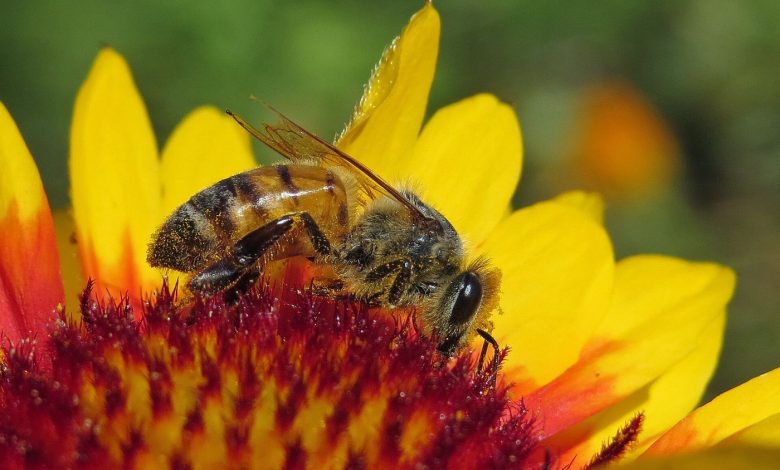
The world’s food depends on insects that most people barely notice. Bees pollinate roughly a third of the crops humans eat, from almonds and apples to coffee and cucumbers, and managed honey bees add at least 18 billion dollars a year to the value of American agriculture alone. That service is under strain. Between April 2024 and April 2025, American beekeepers lost an estimated 55.6 percent of their managed honey bee colonies, the highest annual loss since national tracking began in 2010, with winter losses alone reaching 40.2 percent. Commercial beekeepers, who move their hives across the country to pollinate crops, lost about 62 percent of their colonies, and the damage was estimated at more than 600 million dollars. The main culprit was the Varroa destructor mite, a parasite that weakens bees and spreads viruses, with mites resistant to the most widely used treatment found in nearly every sample examined.
What the Evidence Shows
The losses are not only a beekeeper’s problem. Wild bees, which pollinate many crops as effectively as honey bees, are also declining as meadows and wildflower habitats disappear under development and intensive farming. When pollinators falter, farmers face higher costs and lower yields, and the price of that reaches every shopper. The response is taking shape in several directions: researchers are breeding bees that resist mites, developing new treatments, and studying how diverse diets and habitats strengthen colonies. Farmers are planting wildflower strips and leaving field margins unmown, while gardeners are encouraged to grow native flowers and leave undisturbed ground for nesting bees. Honey bee numbers can be rebuilt by splitting surviving hives, but the wild pollinators that do much of the work cannot be replaced so easily. Protecting them is now a matter of food security. Reporting and analysis from sources such as NASA track the same developments, and specialists following bee colony losses say the direction is now consistent across independent lines of evidence.
The Wider Context
Funding bodies are watching bee colony losses closely because the work sits at the junction of basic curiosity and practical return. Grant panels increasingly ask for a path from discovery to application, while researchers push back that the most valuable uses of fundamental science are rarely the ones written into the original proposal. The tension is productive when both sides stay honest about timescales.
What Happens Next
The long view on bee colony losses is that fields advance by accumulation rather than by single announcements. This result adds a solid, checkable piece to a structure many teams are building, and its authors have shared their data so the piece can be tested from every side. That is how the picture eventually becomes reliable enough to act on. You can follow related developments in our coverage of science.
It is also worth remembering how quickly the picture in this area has changed before. Positions that looked settled a few years ago have been revised as new data arrived, and the same humility is appropriate now. The strongest coverage of this subject, and the most useful advice, tends to come from sources that update their views openly when the facts move, rather than defending an earlier position long after it has stopped fitting the evidence available.